The treatment
A single hydrogel injection that cushions the joint.
The treatment uses a hydrogel that is 2.5% cross-linked polyacrylamide and 97.5% water. It is non-degradable and integrates with the synovial tissue lining the knee, cushioning the joint and reducing pain.
Source: Manufacturer instructions for use (IFU) and patient brochure.
The evidence
Pain improvement maintained out to five years
Across published studies, WOMAC pain improvement of at least nine points after a single injection has been maintained, with follow-up data extending to five years.
Source: Bliddal et al. 2024, Osteoarthritis & Cartilage 32(6):770–771; Bliddal et al. 2025 (5-year follow-up, WCO-IOF-ESCEO). Based on published clinical studies (Bliddal et al.); individual results vary.
There is no cure for osteoarthritis. Treatment may reduce or relieve knee pain, but symptoms may not improve and in some cases may worsen. Individual results vary.
Approvals
A regulated, established treatment
- Health Canada approved since 2024
- CE marked in Europe Class III medical device
- 220+ clinics in Europe routine clinical use
Source: Regulatory status as of 2026 (Health Canada approved 2024; CE marked; not FDA approved). Manufacturer data on file.
Inside the clinic
Where your treatment takes place
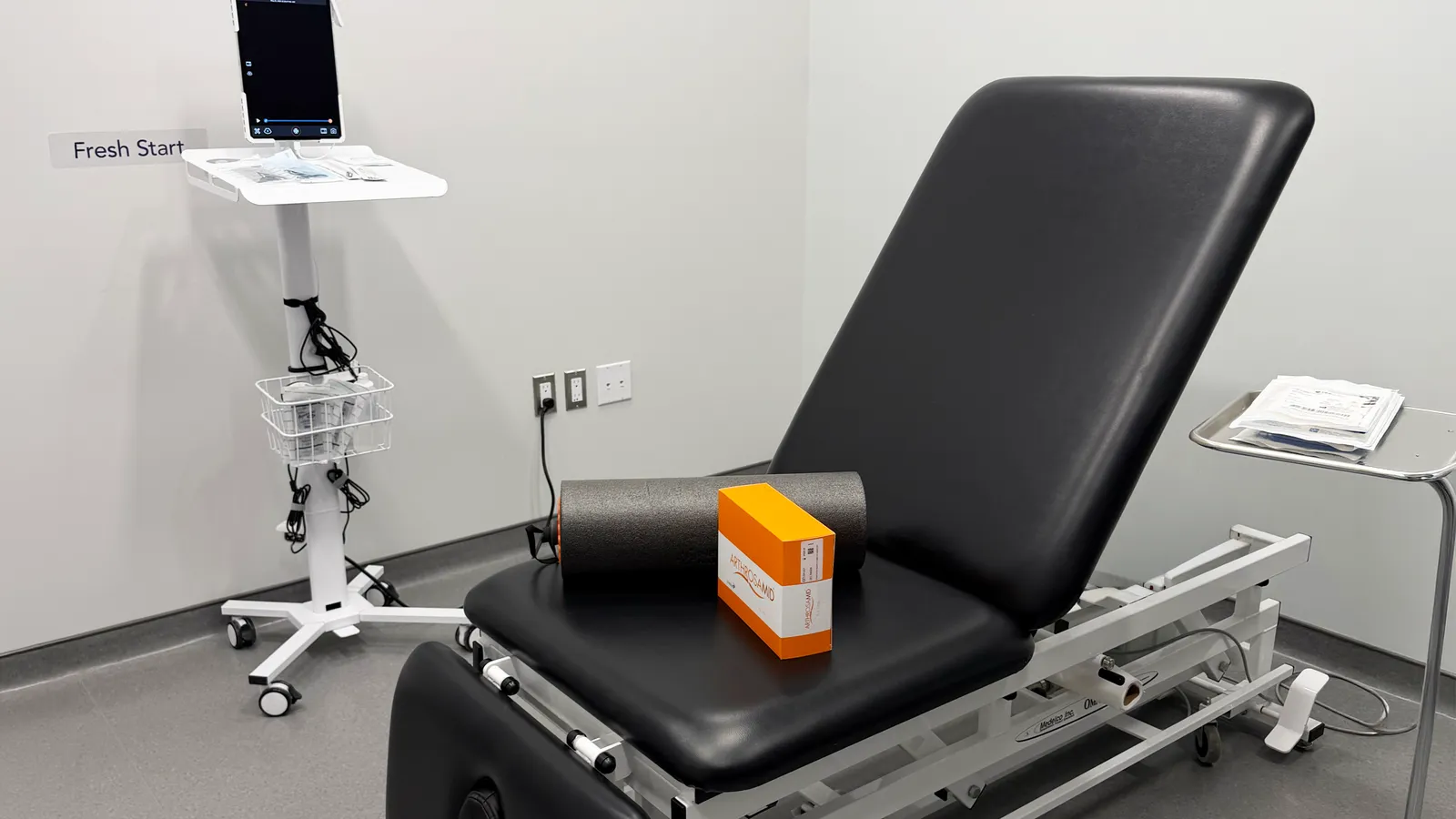
Procedure day
What the day looks like
- Step 01
Arrive
Upon arrival at our Thornhill clinic, you are welcomed by our team and guided through the final steps before your procedure. We recommend arranging transportation, as you should not drive yourself home after the procedure.
- Step 02
Oral antibiotics
As part of our treatment protocol, prophylactic oral antibiotics are taken 1–2 hours before the procedure to help minimise the risk of infection.
- Step 03
Local anaesthetic
A local anaesthetic is administered to ensure your comfort during the procedure.
- Step 04
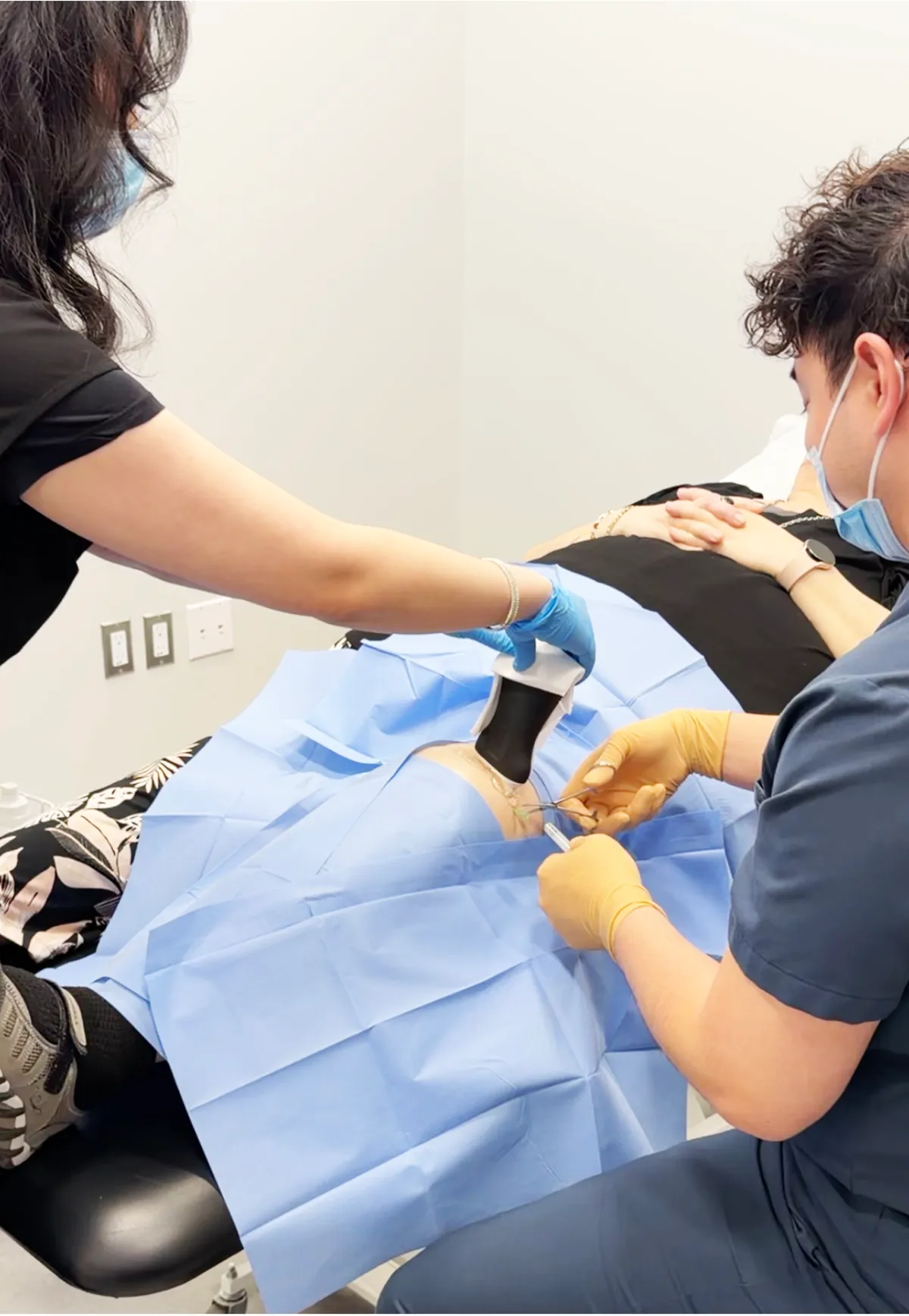
Ultrasound-guided injection
Arthrosamid is precisely injected into the joint under ultrasound guidance to support accurate placement. The procedure itself takes only a few minutes.
- Step 05
Recovery
You rest comfortably in the clinic for approximately 20–30 minutes while our team ensures you are feeling well before discharge.
- Step 06
Return home
You return home the same day with your personalised rehabilitation plan and post-procedure instructions. Avoid driving for the rest of the day.
Recovery
A gradual return, guided by a plan
Some patients experience relief within days, but improvement is typically gradual. Most patients begin noticing benefits within 1–2 weeks, with fuller results often developing over 4–12 weeks. Strenuous activity should be avoided during the early recovery period. Every patient receives a structured rehabilitation plan designed by the Restoration Medical team, which can be followed with a physiotherapist or healthcare provider close to home. This allows patients travelling from out of town to continue their recovery with confidence and convenience. A complimentary online rehabilitation programme is also available through the Arthrosamid website.
Source: Patient leaflet and consent form.
There is no cure for osteoarthritis. Treatment may reduce or relieve knee pain, but symptoms may not improve and in some cases may worsen. Individual results vary.
Potential side effects
What to expect and rare risks
The most common post-treatment effects are temporary joint discomfort and a sensation of swelling. These symptoms are typically mild and resolve within days to weeks. No serious treatment-related adverse events were reported in clinical studies. As with any injection procedure, rare risks include joint infection, bleeding, and allergic reaction. To help minimise these risks, all procedures are performed using strict sterile technique and the Restoration Medical prophylactic antibiotic protocol. During your consultation, Dr. Nguyen will review the potential benefits and risks of treatment to help you make an informed decision.
Source: Bliddal 2021, J Orthop Res Ther; Overgaard 2019. Manufacturer data on file.
Peer-reviewed safety evidence: Neurotoxicity study (Frontiers, 2025)Systematic review (Medical Research Archives)
Who it isn’t for
Contraindications & precautions
Not suitable for
- A prior knee replacement or other foreign material in the knee
- Knee arthroscopy within the past six months
- An active infection or skin disease at the injection site
- Haemophilia or uncontrolled anticoagulation
- A previous non-absorbable injectable product in the knee
Additional assessment may be required if you have
- Poorly controlled diabetes
- An autoimmune disorder
- Pregnancy, or planning a pregnancy
- Under 18 years of age
A physician consultation is required to determine whether treatment is appropriate for your individual circumstances.
Source: IFU and consent form.
Common questions
What is the hydrogel made of?
It is 2.5% cross-linked polyacrylamide and 97.5% water. It is non-degradable and integrates with the synovial tissue lining the joint.
Does the injection hurt?
A local anaesthetic is used. The most common after-effects are temporary joint pain and a sensation of swelling, usually mild and lasting days to weeks.
When will I notice a difference?
Some relief may begin within days. Most people notice gradual improvement from around ten days, with maximum benefit typically between four and twelve weeks.
What are the risks?
No serious side effects were reported in clinical trials. Rare risks include joint infection and allergic reaction; sterile technique and prophylactic antibiotics are used to reduce this risk.
There is no cure for osteoarthritis. Treatment may reduce or relieve knee pain, but symptoms may not improve and in some cases may worsen. Individual results vary.
Book a consultation
Take the next step
A consultation reviews your diagnosis, confirms whether the treatment is suitable for you, and answers your questions. The consultation fee is included in the all-inclusive treatment price.
- Health Canada approved (2024)
- Physician-led care
- Consultation fee included
- 25 minutes from Toronto Pearson